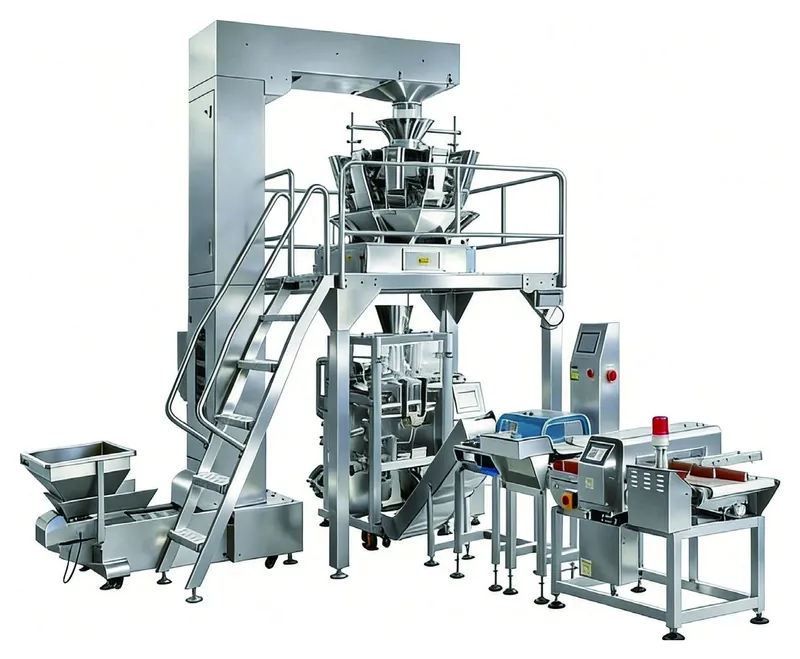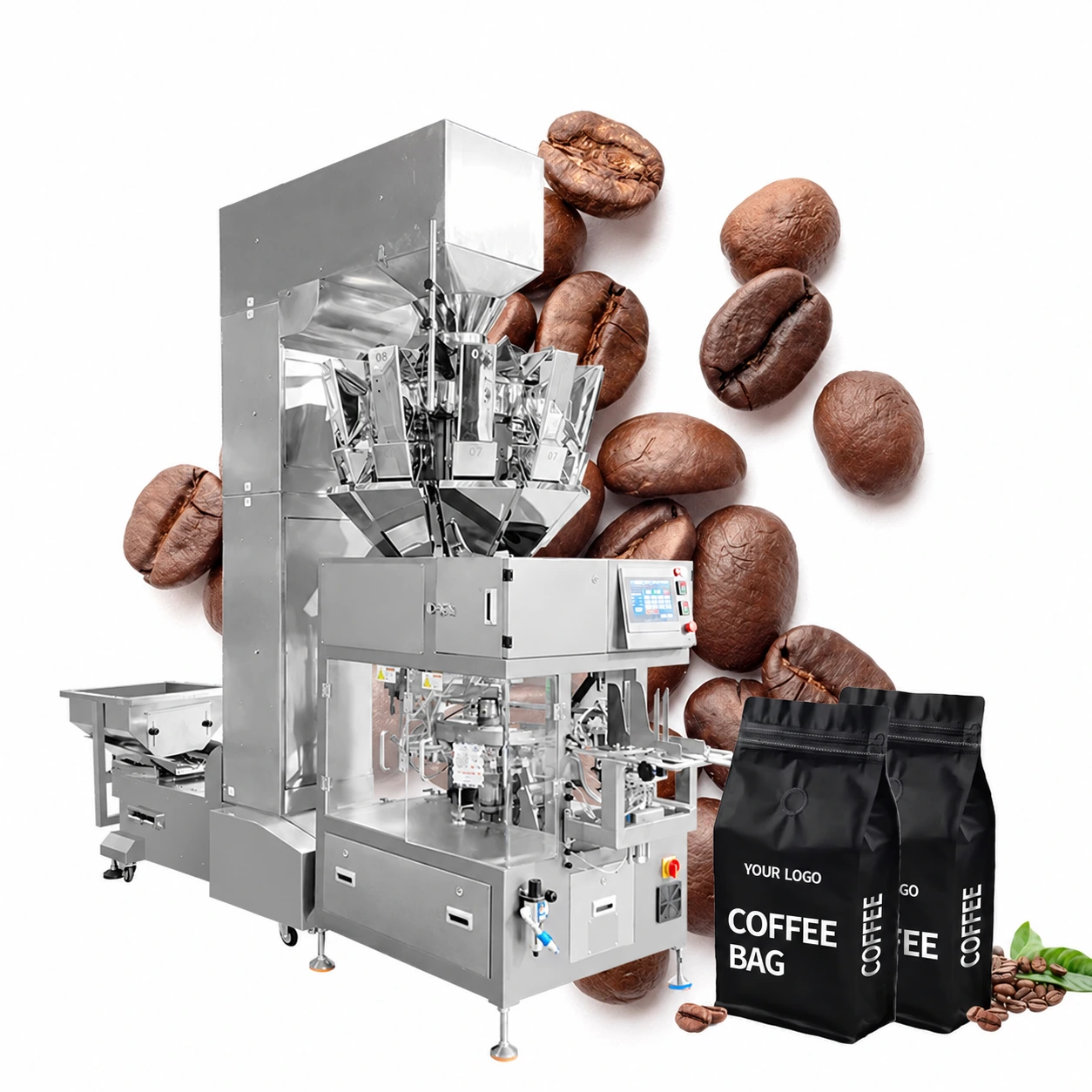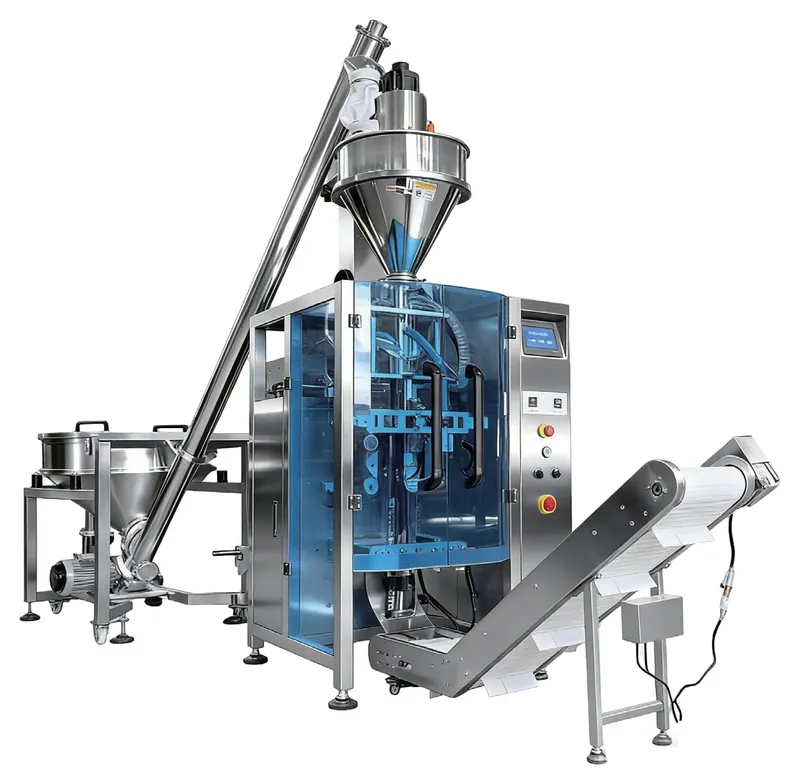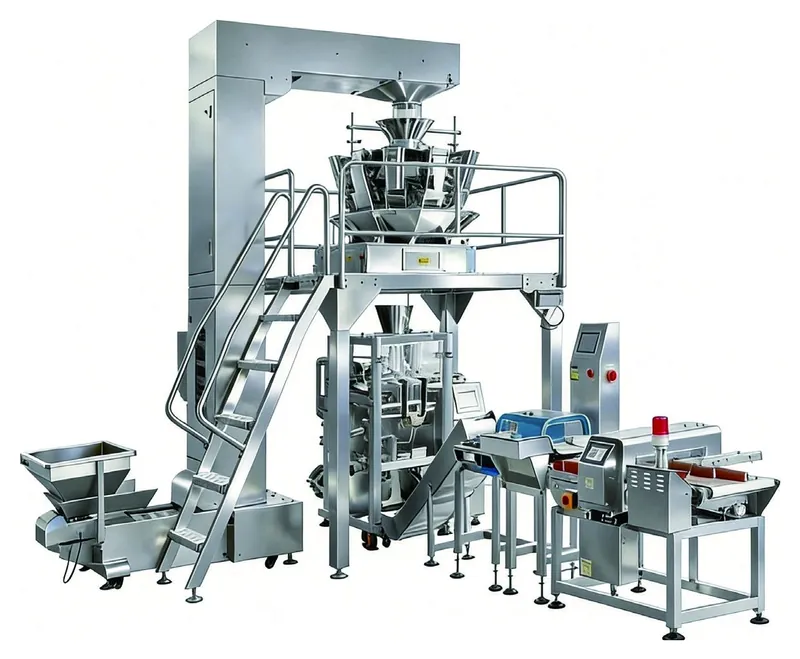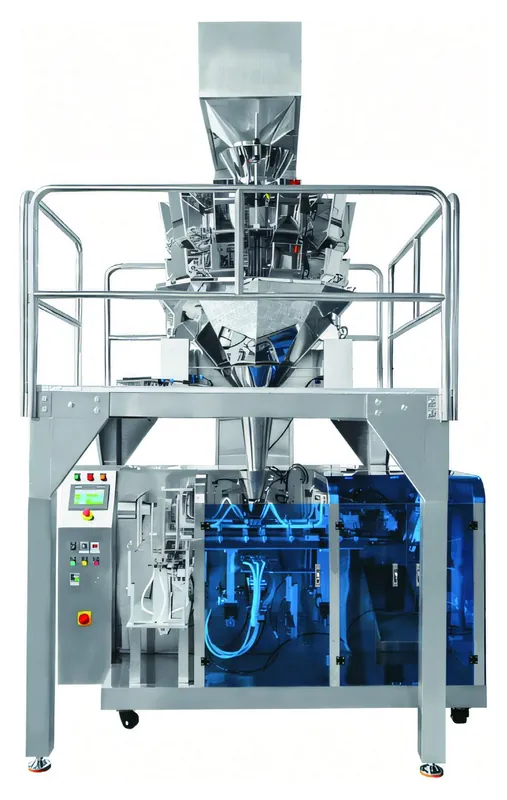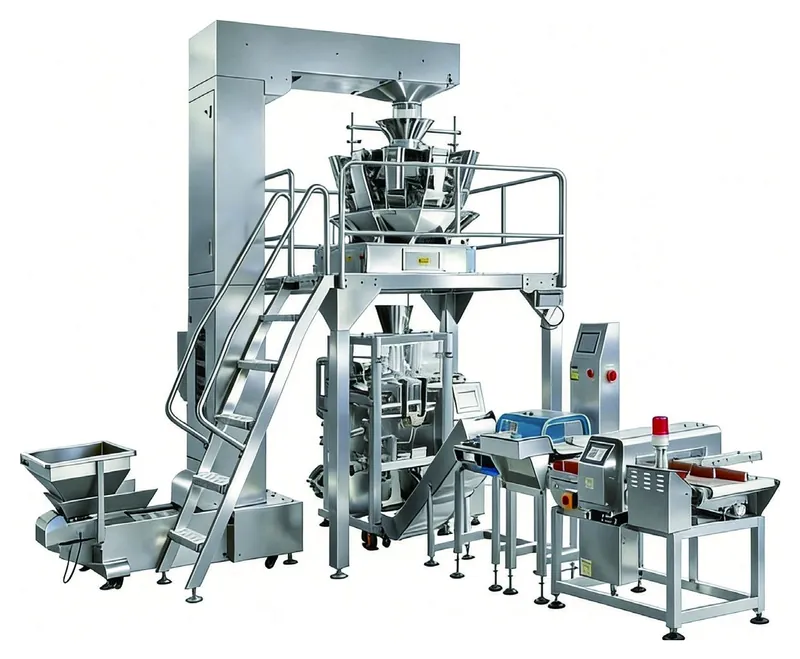
LINEVO’s VFFS coffee bagging equipment forms a bag from roll film, introduces a measured coffee dose, then seals and separates the pack. It suits a project where film, bag geometry and output can be engineered together. The dosing arrangement changes with whole beans or powder; the film-handling and sealing work must match the selected laminate.
Our coffee packaging machine range covers the wider format choice. For equipment that handles already manufactured bags, compare the premade pouch route.
How the VFFS coffee line works
Film travels from a reel through the forming section. A dosing system above the former delivers coffee into the bag, while longitudinal and cross sealing close the pack. LINEVO coordinates film movement and dose release with the selected valve applicator and gas-flushing equipment. Seal-strength checks can use ASTM F88 / F88M where specified in the acceptance plan.
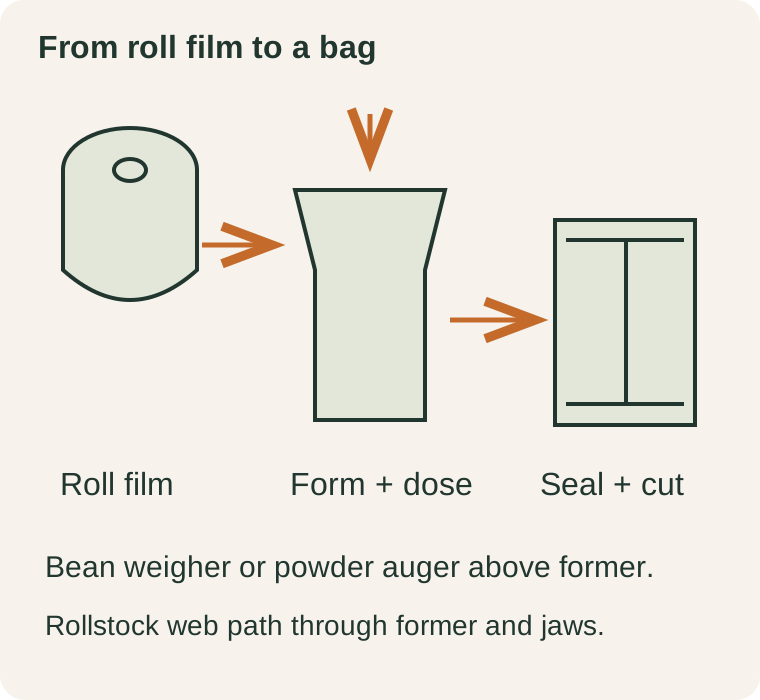
The whole-bean configuration uses a multihead weighing arrangement. A powder packaging configuration can use auger dosing with dust extraction. Choose the dose system using representative product rather than the coffee label alone.
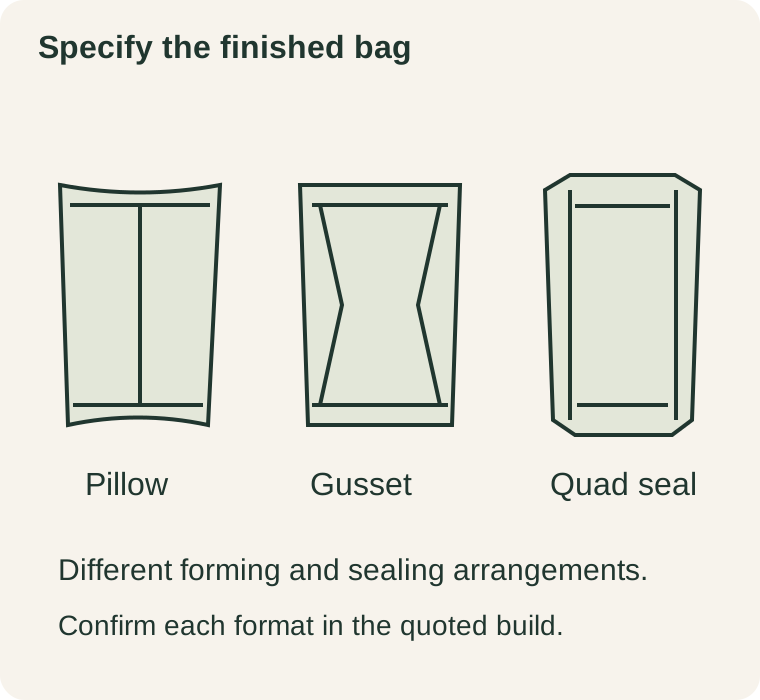
Bag formats and forming sets
Pillow, gusset and quad-seal bags require different geometric and sealing provisions. Specify a finished bag drawing and approved sample for each format. For a flat-bottom retail pouch, review the exact bottom and corner construction against the proposed forming and sealing tooling.
| Bag format | Packaging geometry | Forming and sealing configuration |
|---|---|---|
| Pillow bag | Longitudinal seam and cross-seal position | Forming tube and jaws matched to the bag; coordinated dose release |
| Gusset bag | Fold depth and material build-up | Gusset forming and sealing settings matched to the folded laminate |
| Quad seal | Corner seals and the complete bag profile | Dedicated corner-sealing and forming arrangement |
The specifications above apply to the 500 g / 1 kg whole-bean valve-bag configuration. Pillow, gusset and quad-seal formats use the corresponding forming and sealing parts, identified in the quotation.
Working output for the valve-bag configuration
This configuration has an adjustable weight range of 100–2,000 g and 25–50 bags/min, subject to fill weight and valve application speed. Use these figures when sizing this valve-bag configuration, including the selected fill weight and valve application sequence.
For a clearly stated planning example, theoretical coffee flow kg/h = bags/min × fill kg × 60. At 25 bags/min and 0.5 kg, this is 25 × 0.5 × 60 = 750 kg/h during continuous running. The accepted shift output will also depend on available running time, rejected packs, feeding and material changes. Use the calculation to size the upstream supply, then confirm output in a product trial.
Film width, coding and valve integration
Film width and forming-set dimensions must come from the approved bag drawing. The valve-bag configuration has a 100–2,000 g adjustment range; LINEVO selects a different configuration for fills outside it. Even within that range, a low-density roast may need a larger bag than another coffee at the same weight.
Request film-width limits, reel details, print registration, laminate structure and seal settings in the technical proposal. Include any valve applicator, nitrogen equipment and coder as named scope items. Measure film consumed during starts and changeovers alongside rejected coffee packs; these losses can change the cost comparison with purchased pouches.
Connect the bagger to your production line
Define how coffee reaches the dosing hopper and how finished bags move to weighing, inspection or packing. The coffee packaging line page covers those interfaces. Request a VFFS configuration with your product, bag drawing, film sample and required good-pack output so the quotation can identify the applicable build.