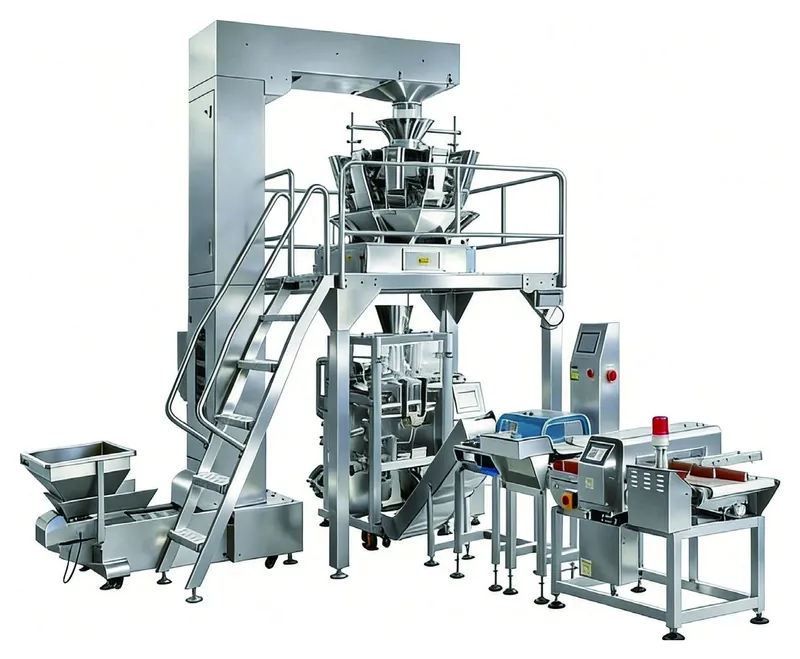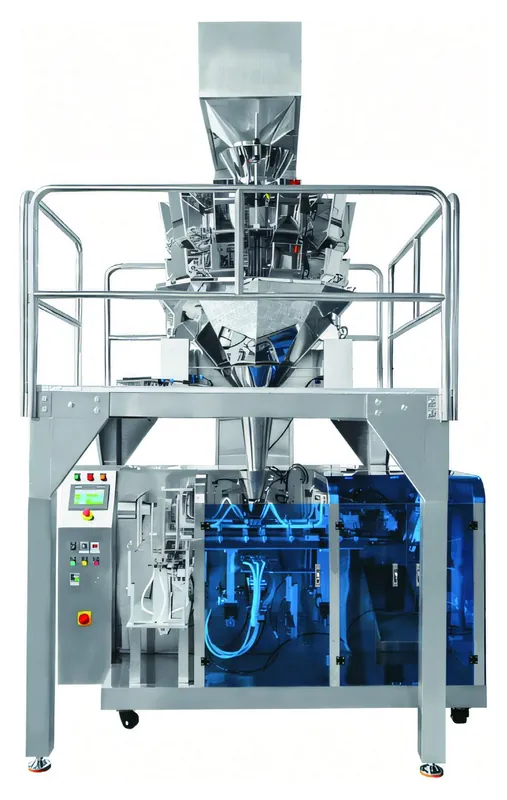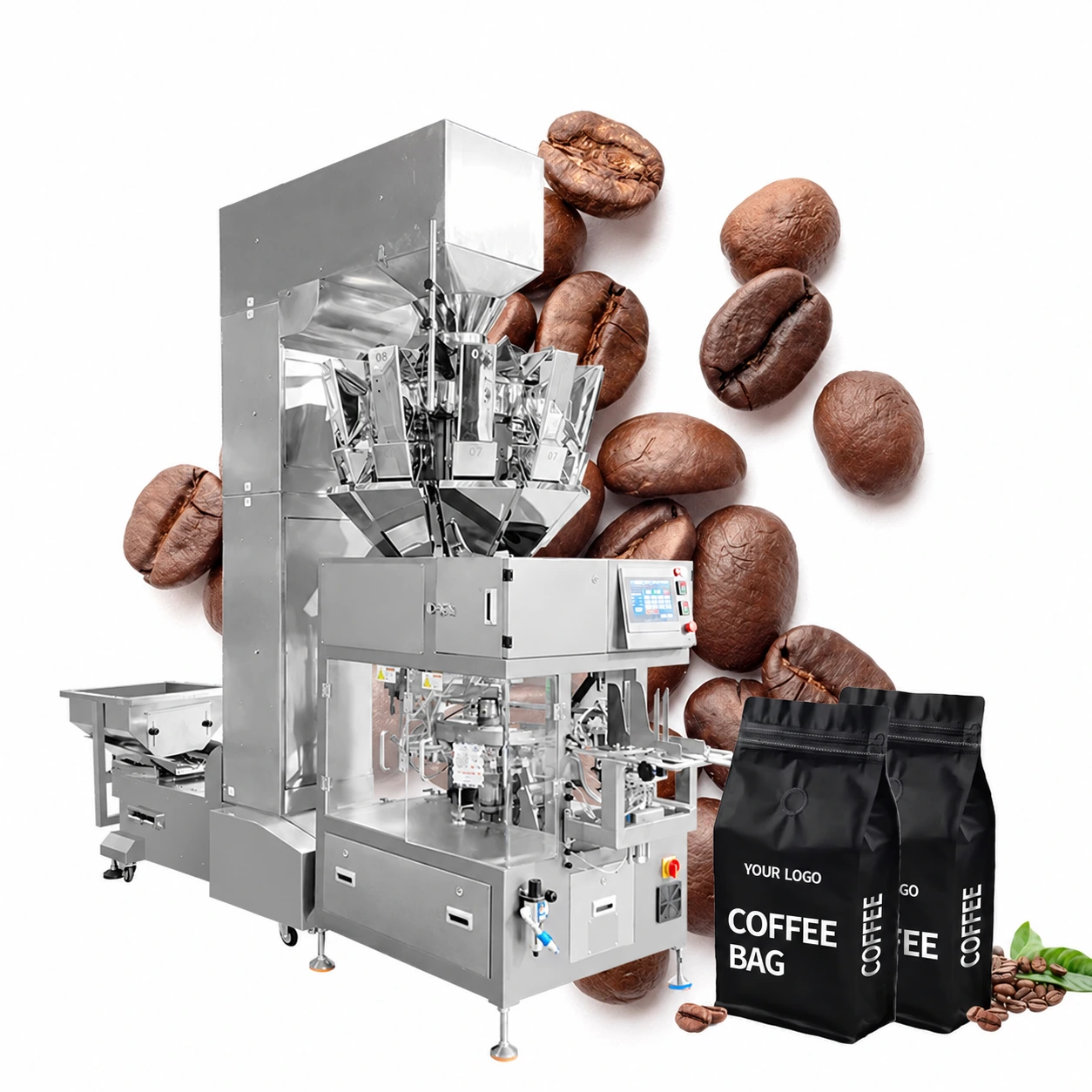
LINEVO’s premade pouch coffee packaging machine retrieves an empty pouch, opens it, receives a measured dose and seals the top. It suits buyers who already purchase finished retail pouches and want to automate their handling. Your pouch supplier produces the finished bag geometry; the machine automates pouch opening, filling and top sealing.
Compare this route with the other systems in our coffee packaging machine range, or use the coffee bagging overview if your packaging format is still open.
Pouch styles and product compatibility
LINEVO matches pouch gripping, opening and seal position to your retail pack. Stand-up zipper, gusseted and flat-bottom pouches have different openings and gripping surfaces. A photo and dimensions start the selection; production samples establish the tooling for the chosen construction.
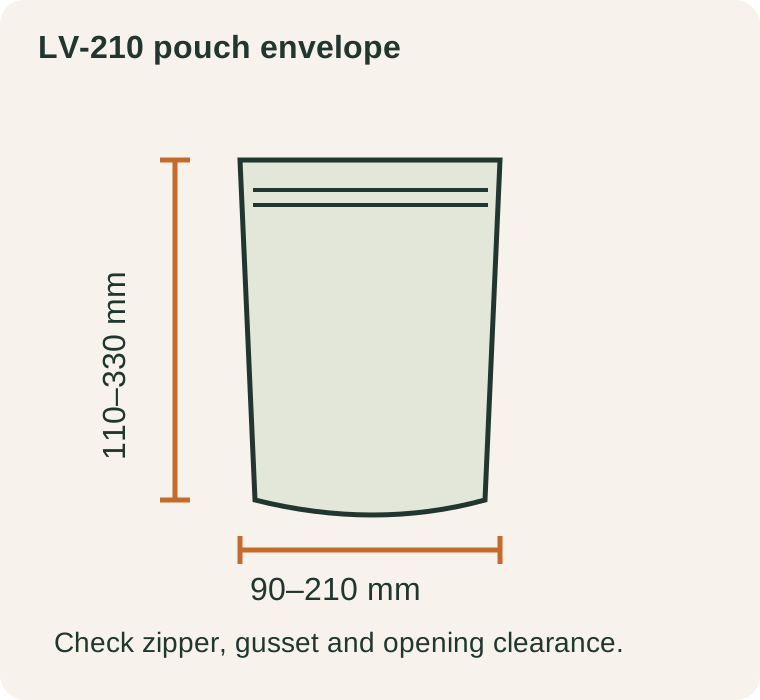
The LV-210 takes pouches 90–210 mm wide and 110–330 mm long. Our team checks zipper opening, gusset construction and valve position within that range and selects a different machine size for packs outside it.
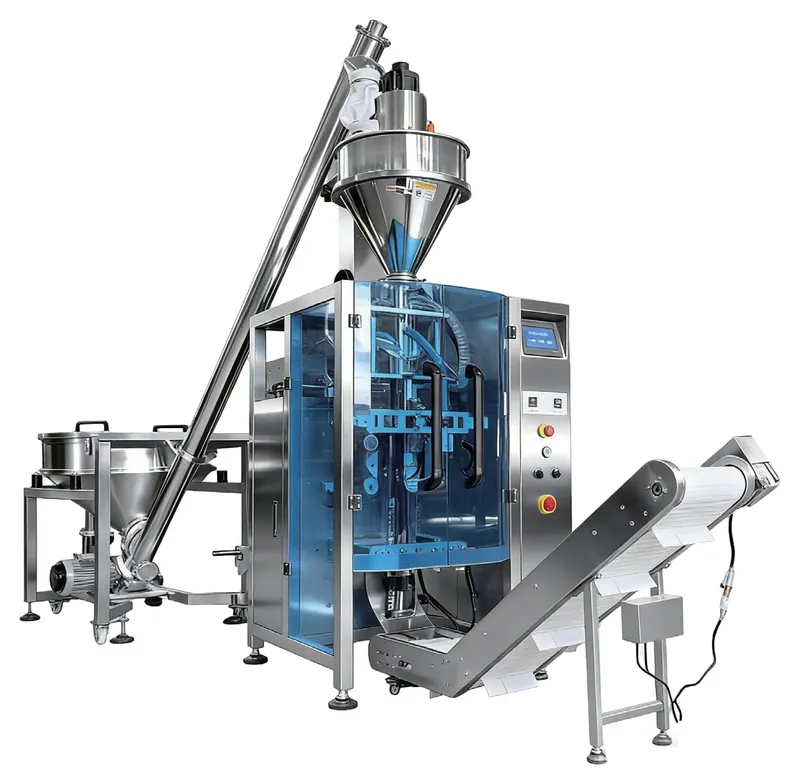
Whole beans require an appropriate weighing and feeding arrangement. For ground coffee or soluble powder, review powder dosing and seal-zone dust control separately rather than assuming the bean configuration will transfer unchanged.
Opening, filling and sealing sequence
The operating sequence is pouch retrieval, opening including the zipper, measuring, filling, sealing and discharge. The zipper-opening setup is matched to your pouch sample. A zipper can change both the opening task and the available space for the fill chute.
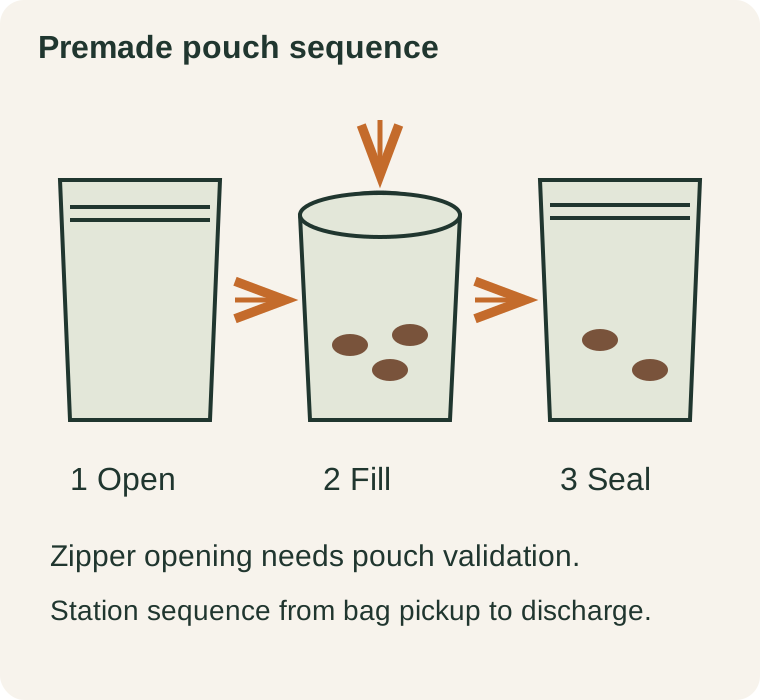
A pouch trial covers pickup, opening, fill weight and finished seals, with accepted bags counted at discharge. ASTM F88 / F88M is a reference method for seal-strength testing when included in the agreed test plan.
LV-210 capacity and production planning
The LV-210 machine speed is 20–70 bags/min. Dose size, pouch opening, filling time and selected options determine the target rate for your configuration.
For planning, required running rate = good bags per shift ÷ available production minutes. If your brief calls for 9,000 accepted pouches and allows 360 production minutes, the requirement is 9,000 ÷ 360 = 25 good bags/min. Confirm that rate using the actual coffee and pouch, with rejection losses included.
| Packaging function | Project input | Configuration work |
|---|---|---|
| Pouch opening | Filled and empty samples, zipper details | Match the opening method and fill-chute clearance |
| Dosing | Coffee sample and each target weight | Select weighing for beans or the appropriate powder filler |
| Top seal | Laminate specification and seal position | Match pouch presentation and sealing settings to the laminate |
Zippers, gas flushing and quotation scope
Specify zipper handling, nitrogen flushing, coding, product feeding and discharge requirements in the offer. A degassing valve already fitted to a purchased pouch is a different task from installing a valve in the packaging machine. Confirm which task your project needs.
Compare pouch costs with cleaning, changeover losses, coffee giveaway and the labor required to replenish empty bags. For a roll-film alternative, review VFFS coffee packaging. Send your sample brief to request a premade pouch configuration; include the bag drawing and utilities so the quotation can name the complete scope.